
Washing Machine Not Spinning — Repair Cost
A machine that will not spin can be a free fix or a R3,700 one, and the gap between those two outcomes is entirely down to diagnosis. Carbon brushes are the most common cause on older machines — and they are one of the cheapest repairs we do.
What actually drives the price
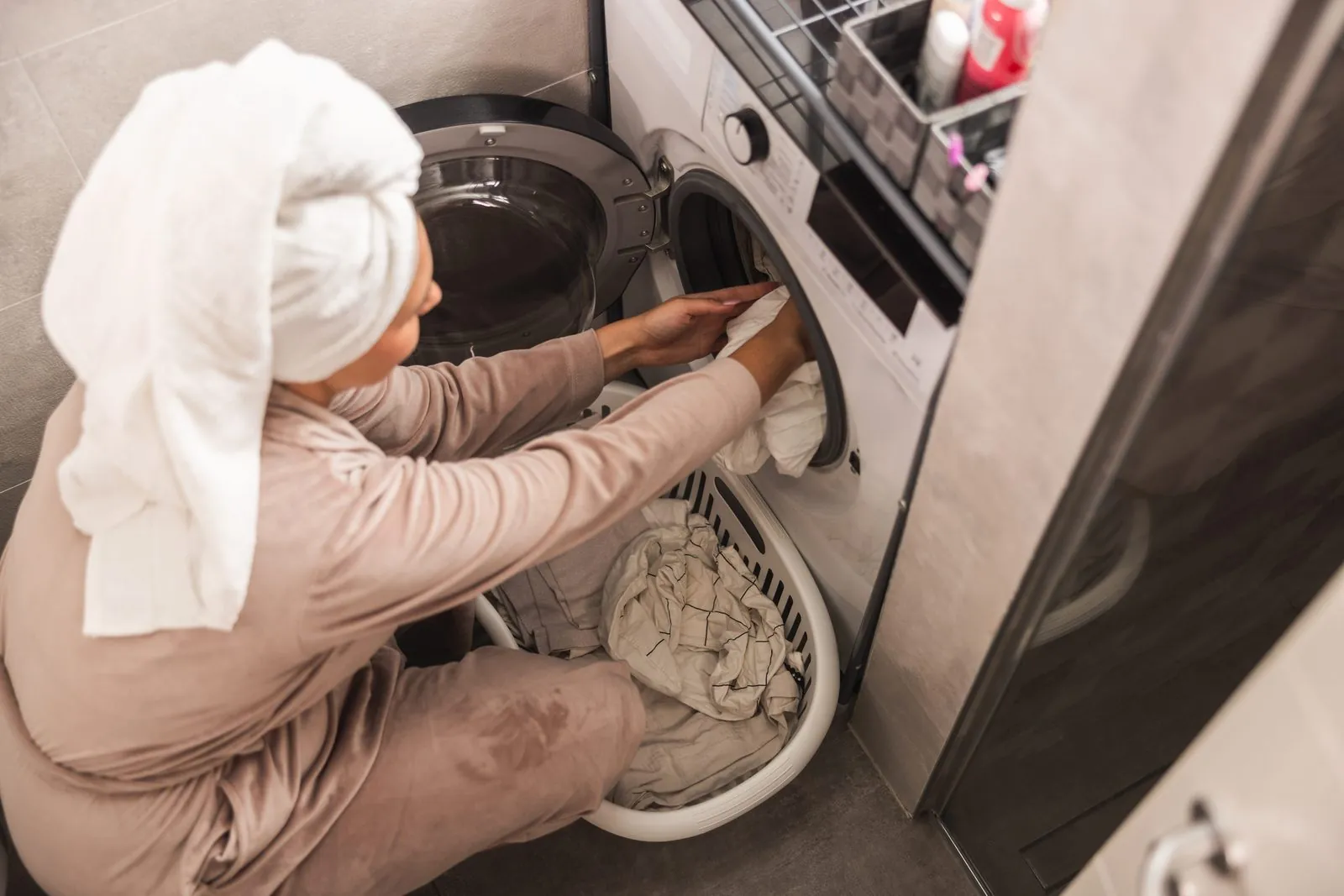
Before anything else, eliminate the free explanations. A drum that is overloaded, or a load that has bunched into one heavy lump on one side, will make almost any modern washing machine abandon its spin cycle rather than risk shaking itself apart. Redistribute the washing, run a spin-only cycle, and a surprising number of "faults" simply evaporate.
If that does not solve it, then the machine has a genuine fault — and the order in which a technician investigates it tells you a great deal about whether they are being straight with you. Cheapest and most likely first: carbon brushes, door interlock, drive belt. Only after those have been eliminated do we start discussing tachometers, control boards and motors.
Typical repair costs
The table below covers parts and labour but excludes the call-out. Treat it as a way to work out whether a repair is worth pursuing — not as a price we are committing to sight-unseen.
| Repair | Typical cost (est.) | What's involved |
|---|---|---|
| Unbalanced or overloaded drum | No charge | Redistribute the load and run a spin cycle. Try this before you call anyone. |
| Carbon brushes (brushed motors) | R750 – R1,400 | By far the most common cause on older machines. Direct-drive machines do not have them. |
| Door lock / interlock | R850 – R1,600 | The machine will not spin if it cannot confirm the door is securely locked. |
| Drive belt | R700 – R1,250 | Belt-driven machines. The drum turns freely by hand but will not spin under power. |
| Tachometer / hall sensor | R1,000 – R1,850 | The motor cannot report its speed, so the control board refuses to spin it. |
| Drain pump (machine will not spin until drained) | R1,050 – R2,100 | A machine that has not emptied will never enter its spin cycle. Fix the drainage and the spin returns. |
| Control board / PCB | R1,600 – R3,700 | The motor control section has failed. Frequently surge-related. |
| Motor replacement | R1,700 – R3,700 | Less common than assumed — diagnosed only after brushes, tacho and board are ruled out. |
What affects the final price
- Whether the machine has carbon brushes at all. Direct-drive and inverter machines — most modern LG and AEG units — do not have brushes. Anyone quoting you for brushes on one of those has not looked at the machine.
- Whether the machine drained first. A washing machine will not spin while there is water in the drum. If it has not drained, the drainage is the fault and the spin is just the symptom.
- Whether the drum turns freely by hand. A drum that turns freely but will not spin under power points at the belt, the brushes or the motor. A drum that is stiff or seized points somewhere else entirely.
- Error codes on the display. Most modern machines will name the circuit they are unhappy with. Send us the code and the model and we can usually pre-diagnose before arriving.
When we would tell you to replace instead
Talking a customer out of a repair costs us the job and earns us the next three. So here is the honest position — you should be replacing rather than repairing when:
- The motor has failed on a machine that is already past eight to ten years old.
- The control board needs replacing on an entry-level machine — the board can be a large fraction of the machine's value.
- The spin fault comes alongside bearing noise, which means two significant repairs at once.
- The total quote exceeds roughly half the price of an equivalent new machine.
As a rough test, compare the quote against half the cost of a like-for-like replacement. If the repair is more, replacement is usually the smarter money — and we will show you the comparison rather than hide it.
Book a diagnosis
The fastest way is the phone — 0861 995 089. You can also send us the model plate on WhatsApp or book online. You will know the call-out fee before the appointment and the repair cost before the repair.
Repairs across Gauteng at the same prices
Our call-out fee and repair pricing do not change by suburb. Pick your area for local booking times.
Washing Machine Not Spinning — your questions
Straight answers about pricing, before you commit to anything.
What are carbon brushes and why do they wear out?
They are small carbon blocks that press against the motor's commutator to deliver current to the spinning part of the motor. They are, by design, a wear item — the carbon gradually erodes with every rotation, exactly like a brake pad. When they wear down far enough to lose contact, the motor loses power and the machine stops spinning. It is a normal end-of-life event for the part, not a sign that anything is fundamentally wrong with the machine, and replacing them is one of the cheapest repairs we do.
Why does my machine wash but not spin?
Because washing and spinning are different demands. Washing needs slow drum rotation and modest torque; spinning needs the motor to accelerate a heavy, wet load to well over a thousand revolutions a minute. Worn carbon brushes will happily deliver the first and fail completely at the second. The other common explanation is that the machine has not drained — no washing machine will spin with water in the drum, so what looks like a spin fault is actually a drainage fault.
My machine says it is spinning but the clothes come out soaking wet.
The drum is turning, but it is never reaching proper spin speed. The usual causes are worn brushes with just enough life left to turn the drum slowly, a tachometer that cannot report the motor's speed to the control board, or a load that is so unbalanced the machine deliberately holds the speed down to protect itself. All three are diagnosable, and two of the three are inexpensive.
Is it worth repairing a machine that will not spin?
In most cases, comfortably yes — because the most likely cause is also one of the cheapest. Carbon brushes, a door interlock or a drive belt are all modest repairs on a machine that is otherwise healthy. The calculation only gets difficult if the diagnosis comes back as a failed motor or control board on an older budget machine, and at that point we will show you the numbers and give you a straight recommendation.
Get a firm quote for this repair
The ranges above will tell you whether a repair is worth pursuing. This form gets you an actual number: send us the model and the symptom and we will call you back.
- Diagnosis on site, then a written quote
- You approve the price before any work starts
- If we cannot fix it, you pay the call-out only
Know the number before you commit.
A proper diagnosis, a fixed written price, and a decision that stays yours. No pressure, and no work until you approve the figure.